Tools to Measure Customer Service: CSAT, NPS, CES and More
Subjective measurement is tied to customer behavior and how they feel about the company. Tools like online or phone surveys help you understand the consumer's personal point of view.
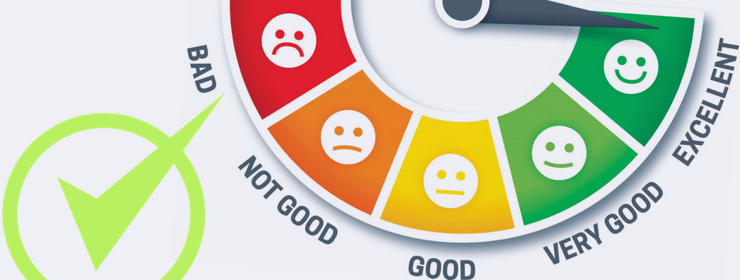
We know how important it is to use your business’s financial resources effectively and efficiently to get the best possible results. Below, we’ll walk you through some of the most widely used tools for measuring customer service. Always keep in mind that knowing what your customers think about your product and/or service is, and will continue to be, key to running your business correctly.
There are two ways to measure customer loyalty:
Objective Measurement uses objective, metric-based data on how the customer behaves, because their loyalty correlates with the company’s continuous improvement. The data typically considered includes time on the website, exit times, and customer lifetime.
Subjective Measurement is tied to customer behavior and how they feel about the company. Tools like online or phone surveys help you understand the consumer’s personal point of view. The most common questions to gather this data are, for example: “Overall, how satisfied are you with the service we’ve delivered?” and “How likely are you to recommend our company to your family or friends?” These tell you whether they’d come back or recommend the place. You can then ask follow-up questions to determine why they would or wouldn’t return—which helps you build strategies aimed at making the customer faithful and loyal.
Read: Why you should survey your customers—it’s crystal clear!
1) CSAT – Customer Satisfaction Score
CSAT is one of the easiest tools to implement and to measure customer satisfaction through phone surveys about service quality, on a scale from 1 to 10, where 1 is “Not satisfied at all” and 10 is “Very satisfied.”
It’s expressed and measured in percentages, where 100% represents the maximum on the satisfaction scale.
The most common customer satisfaction surveys consist of asking your customers how satisfied they are, with or without follow-up questions—that is, using concise, clear questions to obtain clean, accurate data. All of this aligned with our objective as a company or business. There are three survey methods that can be very useful:
- In-app surveys
- Post-service surveys
- Long surveys via email
2) Net Promoter Score (NPS)
The NPS is another tool that helps you measure how likely a customer is to recommend you to someone. The customer is asked how likely they are to recommend you on a scale from 1 to 10. One advantage of this metric is that it’s based not just on the customer’s emotion in the moment, but on an intention—how likely or unlikely I am to recommend a place.
3) Customer Effort Score (CES)
With this method, you don’t ask customers about their satisfaction directly. Instead, you ask about the effort they had to make to resolve a problem or answer a question they had—generally on a scale from 1 (very little effort) to 7 (a great deal of effort).
4) Social Media Monitoring
Social media has had a major impact on the relationship between customers and companies.
In the past, when consumers had a bad experience with a product or service, they shared it with people close to them. Now social media spreads the message exponentially, having both a positive and a negative impact on a brand. Facebook and Twitter are, of course, among the most relevant social networks for monitoring what’s being said about your brand, but there are many others like Quora, TripAdvisor, Yelp, and more.
5) Things Gone Wrong (TGW) Index
This metric measures the number of complaints, or “things that have gone wrong” / “mistakes that can be made,” per 100, 1,000, or even 1,000,000 units of survey responses, units sold, or others (this depends on the number of units sold).
The standard approach for measuring TGW is through the complaint sections in customer surveys.
Once you start measuring, you can start improving processes to change and reduce the number of complaints.
Companies are looking to create value for their customers by building an experience that sets them apart from the competition. The best way to maximize performance is through speed and cost, so you can obtain the right customer satisfaction metrics quickly and promptly—allowing you to act, correct mistakes, and improve the customer experience. A customer will always prefer to belong to, or be a customer of, a company committed to fixing its mistakes and leaving them with a good impression. That builds trust in the business, so they can return with the confidence that the company listens and cares about them.
If you enjoyed this article, leave us a comment with any tool you know.
Read: The most important person in your business—who is it?